





Romania Battery Energy Storage Fire: What Does It Mean for C&I BESS Fire Safety?
2026-09-02
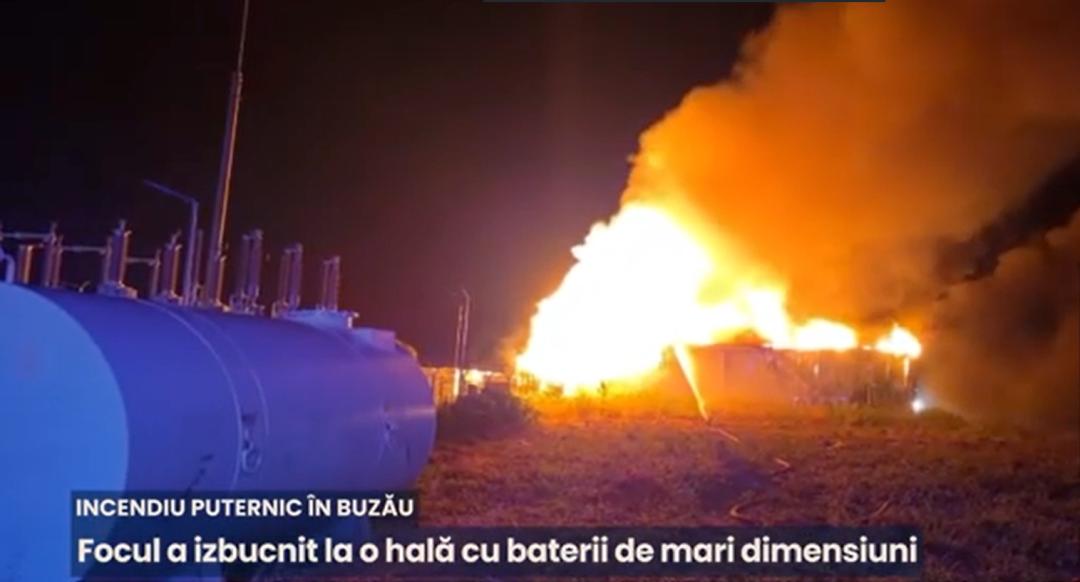
At around 23:30 local time on August 26, 2026, a major fire broke out at a battery energy storage facility in the Stâlpu area of Buzău County, Romania. Local firefighters worked through the night and successfully extinguished the visible flames in the early morning of August 27. Fortunately, no injuries or fatalities were reported.
According to publicly available reports, the fire occurred at a 5.35 MW PV and energy storage project, with the fire starting inside an approximately 500-square-meter energy storage building containing a large number of battery energy storage units. The fire spread rapidly and soon engulfed the entire building, creating significant challenges for emergency responders.
The project site reportedly included two energy storage buildings, both equipped with fire detection and firefighting systems. The fire affected only one of the buildings. Although the second building did not catch fire, a large amount of smoke accumulated inside, requiring firefighters to carry out smoke removal and further safety inspections.
The exact cause of the fire has not yet been confirmed. Local authorities are conducting a further investigation to determine the cause and contributing factors.
Why Is This Incident Important for the Energy Storage Industry?
Compared with conventional building fires, battery energy storage system fires can present more complex challenges. In large-scale energy storage projects, battery cells, modules, PACKs, and battery clusters typically contain a significant amount of stored energy.
When a battery cell experiences an abnormal condition and develops thermal runaway, a rapid increase in temperature and the release of combustible gases may occur. If the condition is not detected and controlled in time, thermal runaway can potentially spread from individual cells to adjacent cells, battery modules, PACKs, or even larger battery clusters.
During this incident, firefighters reportedly arrived to find the storage building already heavily engulfed in flames. Due to the high temperatures and dense smoke, an initial defensive firefighting strategy was adopted to protect emergency personnel, with firefighting operations conducted from approximately 200 meters away.
This highlights an important point for the energy storage industry: BESS fire safety is not only about how to extinguish a fire after it starts. It is also about detecting abnormal conditions early, controlling thermal runaway, and preventing a localized incident from spreading across the entire energy storage area.
What Are the Main Safety Risks of Battery Energy Storage Systems?
One of the key safety risks associated with battery energy storage systems is thermal runaway.
Thermal runaway can occur when a battery cell experiences an abnormal condition such as an internal short circuit, overcharging, mechanical damage, excessive temperature, or other forms of failure. If the generated heat cannot be effectively dissipated, the cell temperature may continue to rise rapidly.
If the abnormal condition is not detected and controlled, thermal runaway can potentially propagate to neighboring cells and affect an entire battery module, PACK, or battery cluster.
For this reason, a complete energy storage safety strategy needs to cover multiple levels, from individual cells and battery modules to PACKs, battery clusters, and the overall BESS. Relying on a single safety or firefighting device is not sufficient.
In addition to flames, battery fires may involve high temperatures, dense smoke, and the accumulation of combustible gases. Therefore, a comprehensive fire protection system should consider not only fire suppression, but also early detection, warning, isolation, ventilation, and post-fire monitoring.
Early Detection Is the First Line of BESS Fire Protection
The earlier an abnormal battery condition is detected, the greater the opportunity to take action before the situation develops into a serious incident.
A battery energy storage system can use multiple monitoring and detection technologies to continuously monitor battery operating conditions. Temperature monitoring, smoke detection, combustible gas detection, and other safety monitoring functions can help identify abnormal conditions at an early stage.
When abnormal temperature increases, smoke, or gas concentrations are detected, the system can issue alarms and, depending on the system design, initiate appropriate protective measures.
At the same time, the Battery Management System (BMS) plays an important role in the overall safety architecture. The BMS continuously monitors key parameters such as battery voltage, current, and temperature and can provide protection against conditions including overvoltage, undervoltage, overcurrent, and excessive temperature.
However, BMS protection cannot replace a dedicated fire protection system. For large energy storage projects, a more complete safety strategy requires coordination between the BMS, fire detection system, fire suppression system, and Energy Management System (EMS).
Proper Zoning Can Help Limit Fire Propagation
The incident also demonstrates why site layout and fire compartmentation are important considerations for BESS projects.
The project reportedly had two separate energy storage buildings. While the fire affected one building, the other building did not catch fire but was still affected by smoke. This highlights the importance of appropriate spatial planning and fire separation when designing energy storage facilities.
For commercial and industrial energy storage projects, the layout of battery cabinets, battery clusters, and storage areas should be designed according to the project capacity, battery technology, installation environment, and applicable local fire safety requirements.
Appropriate fire separation, safety distances, independent protection systems, ventilation, and smoke extraction measures can help reduce the potential impact of an incident on nearby equipment and buildings.
For larger projects, dividing the system into appropriate battery clusters, cabinets, or fire protection zones can help limit the affected area if an abnormal event occurs and provide emergency responders with more time to control the situation.
During the Romanian incident, firefighters also successfully prevented the fire from spreading to two nearby oil-immersed power transformers, avoiding a potentially more serious secondary accident. This highlights the importance of appropriate safety distances and fire separation between energy storage systems, transformers, power distribution equipment, and other electrical infrastructure.
Why Does BESS Fire Protection Require Multiple Layers of Protection?
A reliable battery energy storage system should not depend on a single firefighting device. Instead, it should establish a multi-layer safety system covering prevention, monitoring, early warning, fire suppression, and emergency response.
During normal operation, the BMS monitors battery conditions while the EMS manages the overall energy system. If an abnormal condition occurs, temperature, smoke, and gas detection systems can provide early warnings. If the situation continues to develop, the appropriate fire suppression and protection systems can respond according to the system design.
Post-fire monitoring is also important. Even after visible flames have been extinguished, some batteries may remain at elevated temperatures or present a risk of renewed thermal runaway. Cooling, smoke removal, inspection, and monitoring for possible re-ignition are therefore important parts of the emergency response process.
The firefighting operation in Romania demonstrates how complex large-scale BESS incidents can become. Firefighters may need to maintain a safe distance while coordinating specialized equipment and emergency teams from multiple regions.
This means that BESS safety and emergency response capabilities should be considered during the project design and construction stages, rather than only after an incident occurs.
What Safety Measures Should C&I Energy Storage Projects Consider?
For commercial and industrial energy storage projects, safety design should be based on the specific application, system capacity, installation environment, and local regulations.
First, the battery cabinets, battery clusters, and energy storage areas should be properly designed according to the battery technology, system capacity, and site conditions. Appropriate safety distances and fire compartments should also be considered.
Second, the system should include comprehensive battery monitoring and fire detection functions to identify abnormal temperature, smoke, combustible gases, and other potential risks as early as possible. The BMS should also provide appropriate protection and fault monitoring functions.
The energy storage system should also be equipped with firefighting and fire suppression measures appropriate to the project scale and application environment. The specific configuration should be determined according to applicable local regulations, fire safety standards, and project requirements.
For factories, commercial buildings, and industrial parks, particular attention should also be paid to the safety relationship between the energy storage system and transformers, switchgear, electrical distribution equipment, production buildings, and other facilities.
In other words, BESS safety is not the responsibility of a single component. It is a system-level engineering issue involving batteries, BMS, PCS, EMS, fire protection systems, building design, and operation and maintenance.
What Can We Learn from This Energy Storage Fire?
Although the specific cause of the Romanian energy storage fire is still under investigation, the emergency response demonstrates the potential challenges that large battery energy storage projects may face, including high temperatures, dense smoke, fire propagation, and the risk of re-ignition.
Therefore, safety should be treated as a fundamental part of energy storage project planning, alongside system capacity, efficiency, and cost.
In addition to selecting reliable battery cells and energy storage equipment, project developers should carefully consider BMS protection, fire detection, fire suppression, fire compartmentation, ventilation, smoke extraction, equipment spacing, and emergency response procedures.
For C&I energy storage projects, a well-designed safety system can help reduce potential risks, improve long-term system reliability, and provide industrial and commercial users with more stable and dependable energy storage.
Battery energy storage is becoming an increasingly important part of commercial, industrial, and renewable energy projects. As energy storage capacity continues to grow, system safety has become an essential consideration during project planning, design, installation, and operation.
The Romanian energy storage fire serves as a reminder that BESS safety needs to move from post-incident firefighting toward comprehensive risk management throughout the entire system lifecycle.
By combining reliable battery systems, BMS monitoring, early fire detection, multi-layer fire protection, appropriate fire compartmentation, and effective emergency response procedures, energy storage projects can better manage potential safety risks.
For C&I energy storage projects, safety is not an optional feature. It is a fundamental part of system design.



 Телефон
Коментирайте
(0)